Master Your Literary Journey with a Customizable Reading Planner
In the world of graphic design, effective organization and presentation are paramount, whether for a complex branding project or a personal creative endeavor. A Book Reading Planner Book Review Logbook exemplifies this principle, offering a structured yet flexible framework to transform a simple list of books into a visually engaging and personally meaningful archive. This printable bundle for 2024 is more than a simple tracker; it's a designed system that applies core design principles—visual hierarchy, consistency, and user-centric layout—to the act of reading, turning a passive habit into an active, reflective practice.
Designing Your Personal Brand of Reading
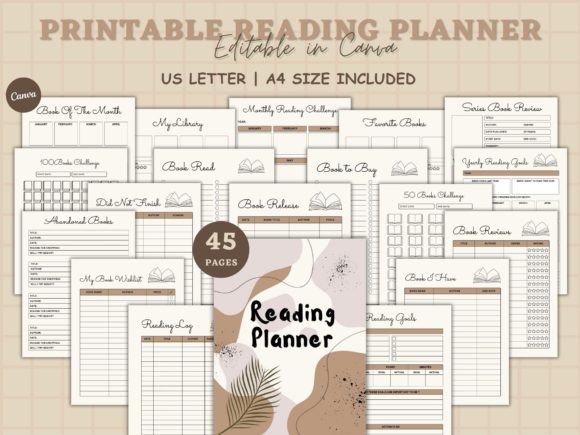
From a professional standpoint, this planner functions as a mini brand identity system for your reading life. The minimalist aesthetic provides a clean canvas, much like a well-designed brand guideline, allowing your content—the books, notes, and reviews—to take center stage. The editable Canva and PDF formats are crucial, offering the same flexibility a designer needs to adapt templates to specific client requirements. You can adjust typography to match your preferred style, modify the color palette to reflect your mood or the season, and restructure layouts to prioritize what matters most, be it detailed book reviews, reading goals, or curated wishlists.
The practical applications of such a structured template extend into numerous creative and professional spheres:
- Brand Storytelling: A curated reading log can become part of a personal or corporate brand's narrative, showcasing intellectual curiosity and continuous learning.
- Content Inspiration: The log serves as a repository for memorable quotes, ideas, and themes, providing raw material for blog posts, social media content, or creative writing.
- Visual Journaling: Incorporating the printable into a bullet journal or scrapbook merges functional planning with visual design, creating a rich, multimedia record.
- Gift Design: A customized, printed planner makes a thoughtful and professional-looking gift for fellow book lovers, demonstrating care and an eye for quality presentation.
Principles for Effective Implementation
When selecting and using any design asset, key considerations ensure it enhances rather than hinders your workflow. For this reading planner, focus on consistency in how you fill out each section to create a cohesive visual record. Pay attention to readability by choosing legible fonts and ample spacing when editing. The template's strength lies in its scalability—whether you print it as an A4 booklet or a US Letter binder, the clean design maintains its integrity.
Think of the different sections—the Monthly Reading Log, Book Reviews, and Yearly Goals—as components of a larger visual hierarchy. Use the provided structure to guide your eye naturally from broad goals to specific details. This mirrors the approach in editorial design or web design, where information architecture is key to user experience. By customizing the planner, you are essentially performing UX design for yourself, creating an interface that makes the process of tracking and reflecting on books seamless and enjoyable.
Beyond the Page: Creative Applications
The utility of a well-designed logbook template extends far beyond personal use. It can inspire packaging design for bookish merchandise, inform the layout of a literary social media graphics series, or serve as the structural blueprint for a digital product like an online course on reading more effectively. The minimalist framework is a versatile design asset, adaptable for advertising campaigns promoting libraries or bookstores, or as part of a presentation for a literary club.
Ultimately, investing in a thoughtfully designed tool like this planner underscores a fundamental truth in both design and personal development: the systems we use shape our experience. A cluttered, poorly organized list can stifle motivation, while a clean, inviting, and customizable interface encourages consistent engagement. By applying professional design sensibilities to your reading habit, you don't just track books—you create a beautiful, evolving portfolio of your intellectual journey, proving that the tools we choose to organize our passions are, in themselves, a form of creative expression and communication.